

Concrete is a versatile material used extensively in construction, but over time, it is prone to cracking. These cracks can compromise the strength and durability of structures if not addressed properly. Knowing the different types of concrete cracks, their causes, and the resulting effects can help mitigate potential risks and ensure long-term structural integrity.
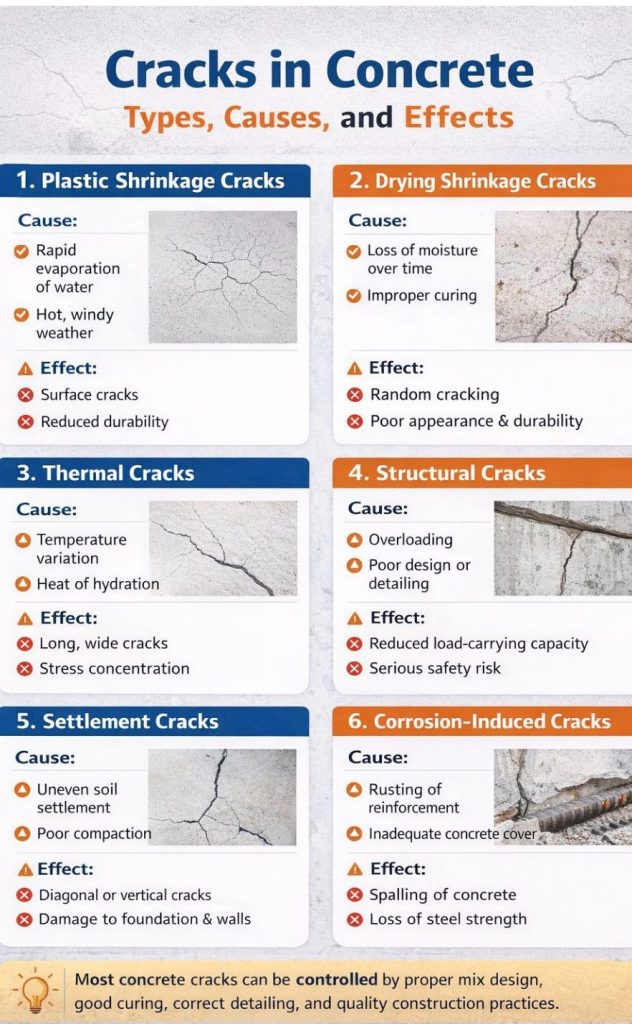
1. Plastic Shrinkage Cracks
Cause:
Plastic shrinkage cracks typically occur when water evaporates too quickly from fresh concrete. This rapid evaporation is often caused by hot, windy weather or excessive exposure to sunlight before the concrete has set properly.
Effect:
- These cracks are superficial, appearing on the surface.
- While they do not significantly affect the structural integrity, they reduce the durability of the concrete, making it more susceptible to further damage from environmental factors like moisture penetration.
2. Drying Shrinkage Cracks
Cause:
Over time, as concrete cures, it loses moisture. If the moisture loss is excessive or improper curing practices are used, drying shrinkage cracks can occur.
Effect:
- These cracks often appear randomly across the surface and can vary in size.
- Not only do they detract from the appearance of the concrete, but they can also compromise the concrete’s durability, allowing external elements to infiltrate and cause further damage.
3. Thermal Cracks
Cause:
Thermal cracks occur due to temperature variation in the concrete, particularly during the hardening process. The heat of hydration—the chemical reaction that occurs as cement hydrates—can also generate internal temperature differences within the concrete, leading to cracking.
Effect:
- Thermal cracks are typically long and wide and may occur in areas where temperature shifts are extreme, such as in regions with fluctuating climates.
- These cracks create stress concentrations in the concrete, which may lead to further deterioration and potential failure if not addressed promptly.
4. Structural Cracks
Cause:
Structural cracks are typically the result of overloading, poor design, or improper detailing. When the concrete structure is subjected to loads beyond its design capacity, it can lead to cracking, especially in areas where the reinforcement is inadequate or poorly placed.
Effect:
- These cracks can significantly reduce the load-carrying capacity of the concrete, making it a serious safety risk.
- If left untreated, structural cracks can escalate and potentially lead to the collapse or failure of the entire structure.
5. Settlement Cracks
Cause:
Settlement cracks occur when the soil beneath the concrete foundation settles unevenly. This is often due to poor compaction or improper foundation preparation, leading to differential settlement of the structure over time.
Effect:
- These cracks typically appear diagonal or vertical in the walls or foundations, as the structure adjusts to the shifting foundation.
- Settlement cracks can lead to damage to the foundation and walls, compromising the overall stability of the structure.
6. Corrosion-Induced Cracks
Cause:
Corrosion-induced cracks are caused by the rusting of steel reinforcement within the concrete. This often happens when the concrete cover is insufficient, allowing moisture and oxygen to reach the steel, leading to rust formation.
Effect:
- The corrosion process causes the concrete to spall, where chunks of concrete break off due to the expansive forces of rusting steel.
- This not only damages the surface but also weakens the steel reinforcement, resulting in loss of steel strength and ultimately compromising the concrete’s load-bearing capacity.
Key Takeaway
Most concrete cracks can be controlled and minimized with proper mix design, good curing practices, correct detailing, and quality construction. By understanding the types and causes of cracks, construction professionals can implement preventive measures and ensure the durability and safety of concrete structures for years to come.
For optimal results, it’s crucial to prioritize quality in concrete work, site engineering, and civil engineering practices, as these factors directly influence the long-term performance of concrete structures.