
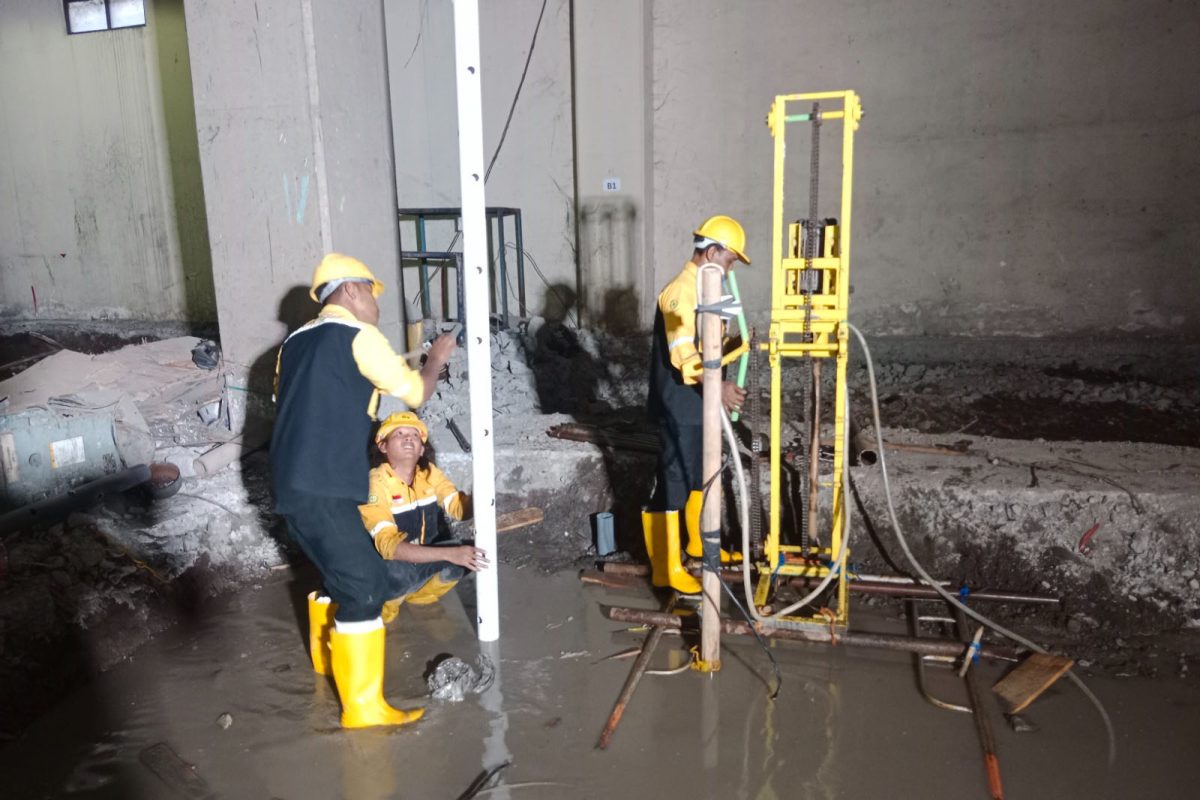
In construction and structural restoration, the durability of concrete determines a building’s longevity. Over time, concrete structures can develop cracks, suffer wear and tear, or contain internal voids caused by incomplete pouring. This is where cement grouting becomes an essential repair and reinforcement technique.
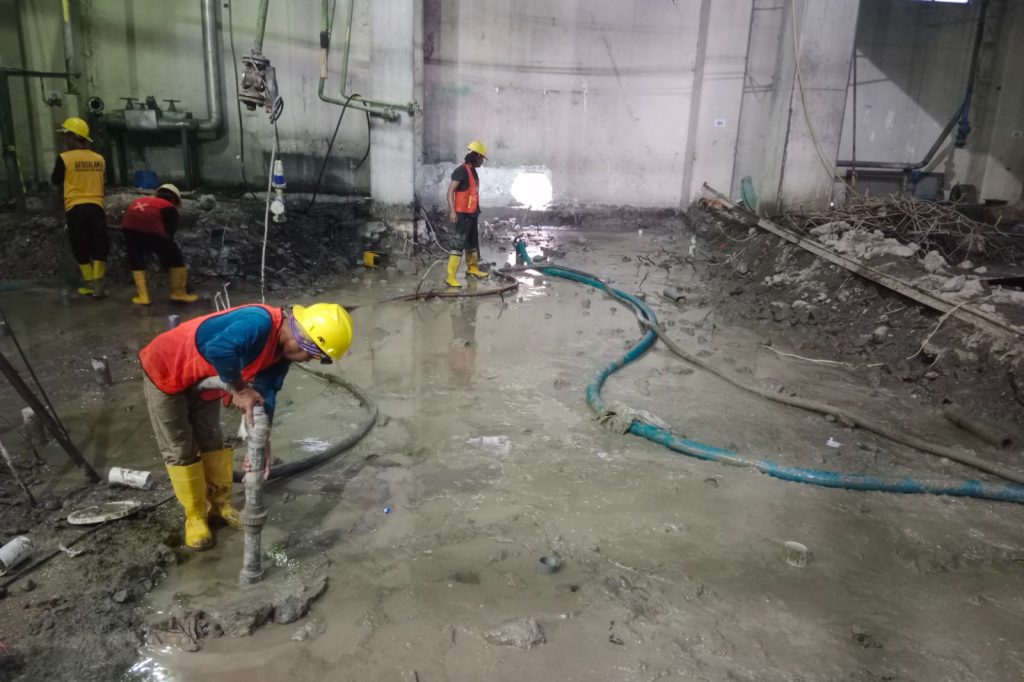
In simple terms, cement grouting is the process of injecting or pouring a fluid mixture of high-performance cement into gaps, cracks, or voids within concrete and soil. This method strengthens the structure, seals against water leaks, and restores the integrity of the building without requiring costly demolition.
Primary Functions of Cement Grouting in Construction
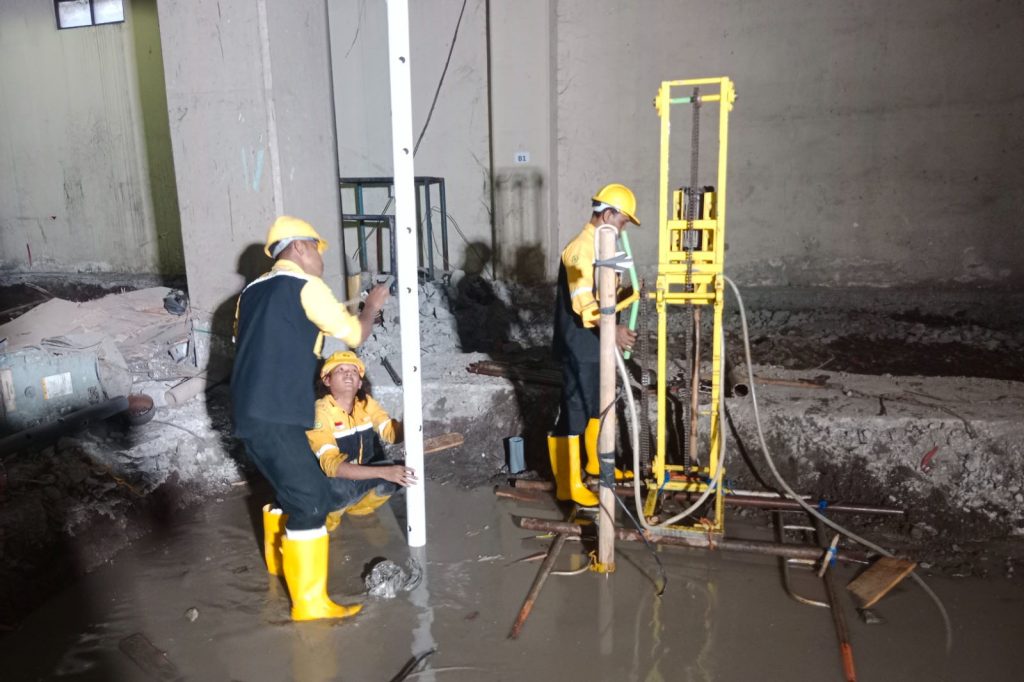
Cement grouting is widely used both in new construction projects and structural rehabilitation. Key applications include:
- Repairing Concrete Cracks: Filling micro-fissures and structural cracks to restore full concrete integrity.
- Waterproofing and Leak Prevention: Sealing pathways for water ingress in subterranean or submerged areas like basements, dams, tunnels, and swimming pools.
- Soil and Foundation Stabilization: Filling sub-surface voids beneath foundations or slabs to prevent settlement and sinking.
- Baseplate Grouting: Filling the space between concrete foundations and heavy industrial equipment bases to absorb vibration and distribute load evenly.
Common Types of Cement Grout Materials
Depending on the technical demands of the project, cementitious grouts come in several distinct formulations:
1. Standard Cement Grout
A basic mixture consisting of Portland cement, water, and sometimes fine sand. It is typically used for large-volume void filling where high precision or non-shrink properties are not critical.
2. Non-Shrink Grout (NSG)
The industry standard for precision structural work. Formulated to ensure zero shrinkage during the curing process, this material prevents gaps from forming as the grout hardens. It is ideal for machine bases, anchor bolts, and precast concrete connections.
3. High-Strength Cement Grout
Enriched with chemical admixtures, this grout gains high early compressive strength rapidly. It is heavily utilized in major infrastructure like bridge piers, marine structures, and heavy load-bearing columns.
4. Microfine Cement Grout
Composed of ultra-fine cement particles, this material can penetrate hairline cracks and micro-pores in dense soil or concrete where standard cement grains cannot enter.
Step-by-Step Cement Grouting Process
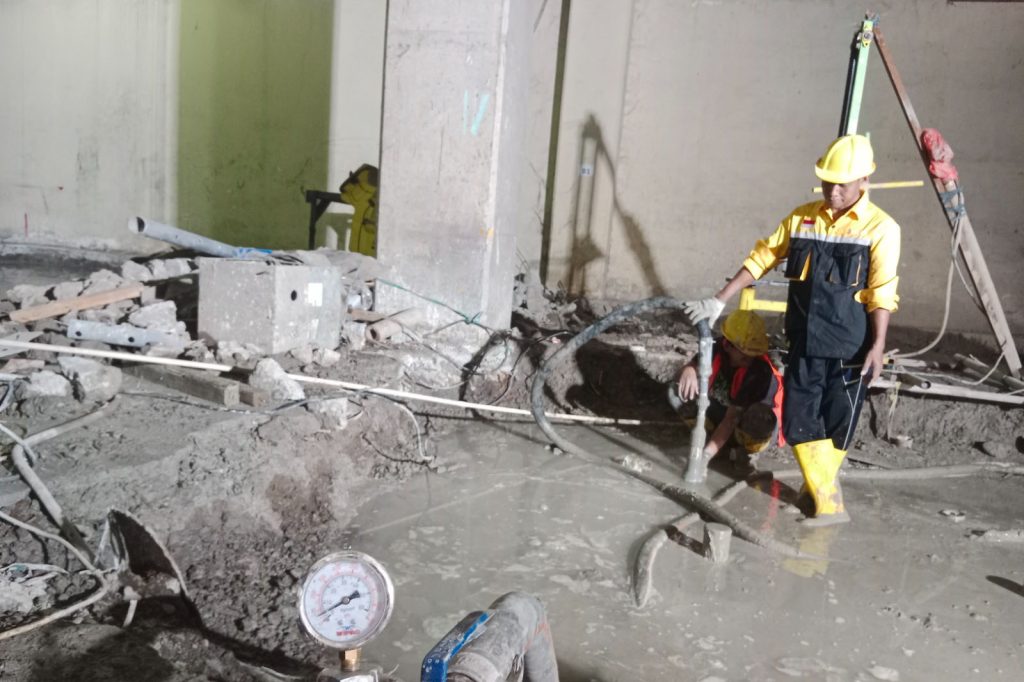
Achieving a durable repair requires a systematic approach to application:
1. Surface Preparation and Cleaning
The target area must be thoroughly cleared of dust, oil, and loose debris. The concrete substrate is then saturated with water to prevent the dry concrete from absorbing moisture out of the fresh grout mixture.
2. Port Installation and Sealing
For pressure injection, injection ports or packers are placed along the path of the crack. The outer surface of the crack is sealed with a surface sealer (such as epoxy resin) to prevent the grout from leaking out under pressure.
3. Mixing
Grout is mixed using a high-shear mechanical mixer to achieve a uniform, clump-free consistency. Water ratios must be strictly controlled according to manufacturer guidelines to maintain structural integrity.
4. Injection or Placement
The grout mixture is pumped or poured into the void. During pressure injection, pumping starts from the lowest port and moves upward sequentially. This ensures trapped air is displaced, leaving no hidden pockets or voids.
5. Curing
Proper moisture curing is essential after placement. Keeping the area hydrated prevents shrinkage cracks and ensures the cement matrix achieves its maximum intended strength.
Key Success Factors in the Field
Three major factors dictate the long-term success of any grouting project:
- Viscosity and Flowability: A mixture that is too thin reduces overall strength, while a mixture that is too thick will fail to penetrate tight voids.
- Injection Pressure: Pump pressure must be carefully calibrated. Excessive pressure can damage fragile or already compromised surrounding concrete.
- Surface Cleanliness: Strong bonding between the new grout and the existing concrete relies entirely on how well contaminants were removed prior to application.
When executed correctly, cement grouting provides an economical, non-destructive, and highly effective way to extend the lifespan of concrete structures. Selecting the right material grade and adhering to disciplined field procedures ensures long-term safety and structural performance.